
Key Takeaways
- Preschoolers need simple, clear emotion words to express how they feel.
- Build emotional awareness and self-regulation by talking about feelings with your child.
- Use everyday moments as natural opportunities to discuss emotions.
- Model emotional language to help your child express feelings appropriately.
- Expanding emotion vocabulary supports social, empathy, and communication skills.
Proper early childhood development hinges on the ability to understand and express feelings. For preschoolers, this is a big deal. Emotions feel big, confusing, and overwhelming at this age, and that can be exacerbated when they lack the language skills necessary to tell people how they feel.
Learning emotion words helps them communicate, regulate their feelings, and build healthy relationships. Parents and caregivers can support the emotional growth of their preschoolers in San Antonio with patience and consistency.
Importance of Emotion Words
Because preschoolers lack the vocabulary to describe their emotions, this may manifest in tantrums, withdrawal, or frustration. Teaching preschoolers emotional language helps them express their feelings with words rather than through behaviors, according to the Kids Mental Health Foundation.
Emotion words help children:
- Understand their feelings
- Communicate their needs
- Feel validated and understood
- Manage emotions in healthy ways
Start with Basic Feelings
First, introduce basic emotion words such as:
- Happy
- Sad
- Mad
- Scared
- Excited
Weave these words into everyday conversations to reinforce them and help children match the word with the emotion. Once they feel comfortable with these emotion words, you can move on to more complex ones, such as proud or nervous.
Embrace Everyday Moments
Capture opportunity to talk about emotions as they arise. That’s the best time to learn, after all, because preschoolers learn well when faced with real-life experiences.
Here are some examples of when you can name emotions naturally:
- During playdates or group classroom activities
- After conflicts or disappointments
- When transitioning between activities
- While reading books or watching shows
Simple observations help children connect words to feelings. They may express frustration when a puzzle piece doesn’t fit, or they may be sad when a friend is sick and can’t come over to play.
Model Emotional Language
Children tend to mimic what they see the adults in their lives doing on a daily basis. It’s always better to show than to preach. They will pick up on your emotional language when you model it in everyday life consistently. This shows preschoolers that feelings are normal and can be managed.
When you demonstrate healthy emotional expression and coping strategies, your children will be more likely to do the same.
Read Books
Use story time as a powerful way to convey emotions. When you read about characters experiencing relatable feelings, explore these emotions with your child to increase understanding and empathy. When you ask productive questions like “why do you think the character feels that way” or “how could they have handled that situation better”, you’re building empathy and strengthening emotional insight.
Expand Emotional Vocabulary
You can’t throw too much at preschoolers all at once. Building an emotional vocabulary takes time. However, it’s also important to introduce new words and concepts as their understanding grows. Instead of simple emotions such as “mad,” you can talk about similar words such as “angry”, “upset”, “frustrated”, and “disappointed”. Giving preschoolers choices allows them to reflect on their emotions and choose the best word that describes what they’re feeling.
Don’t Judge
Validating their feelings without judgement is key to the process. Guide them positively, interject when needed, and let them know having emotions is OK. Don’t judge their feelings, but do let them know when a reaction to a feeling is inappropriate, such as “I understand you’re mad, and that’s OK, but it’s never OK to hit your friend.”
By telling them that feelings are acceptable and manageable in a gentle way, this builds trust and emotional safety.
Encourage Expression Through Other Mediums
It’s still hard for preschoolers to express their feelings through words. Embrace the power of play, art, and movement as natural outlets for emotional expression.
Ask them to:
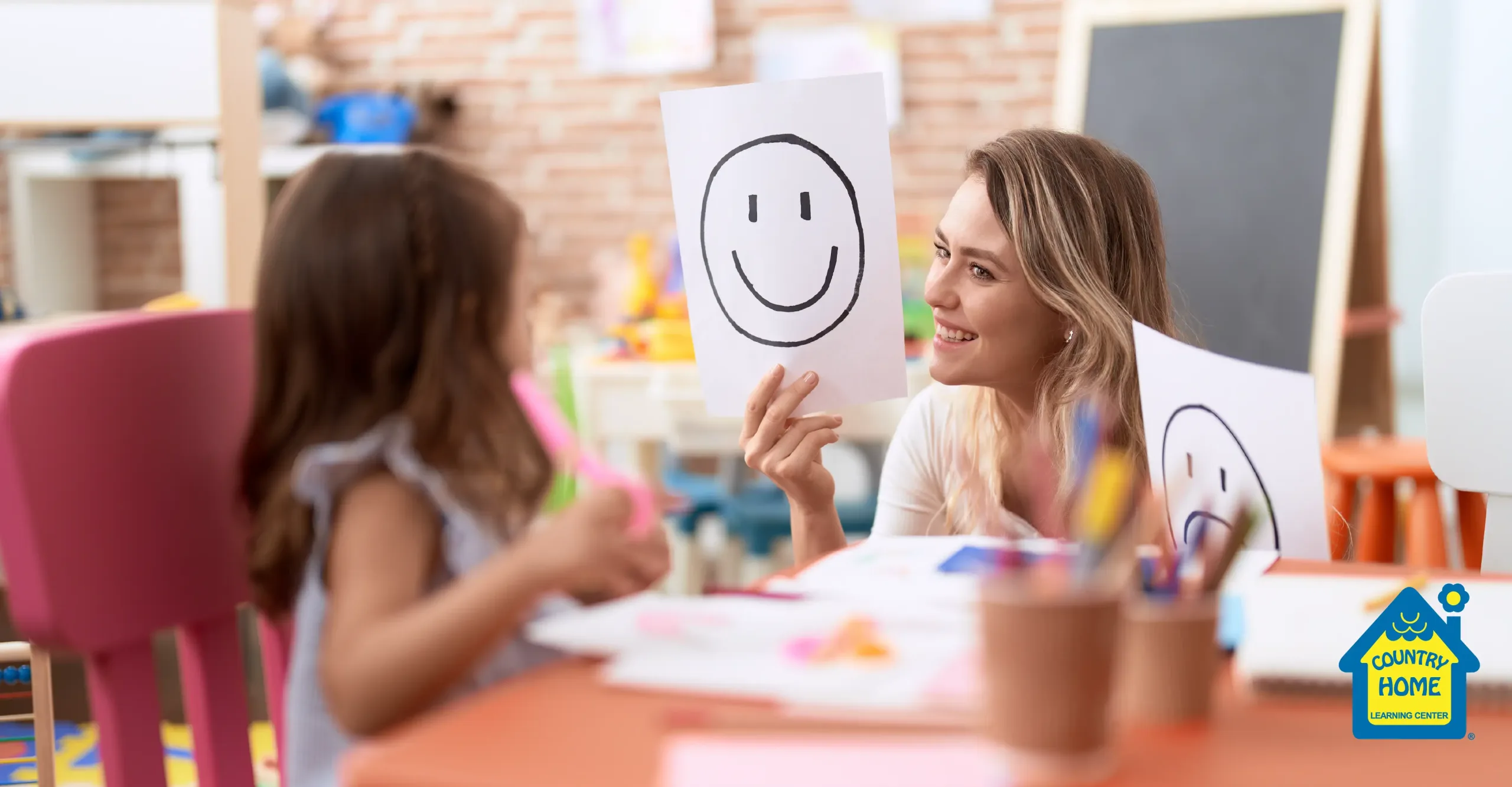
- Draw faces showing different emotions
- Role-play with dolls or stuffed animals
- Act out feelings with music and movement
Be Patient and Consistent
Emotional development takes time, which means it’s important to build in patience and consistency to the process. Kids need repeated practice to recognize, name, and manage their feelings. They won’t always remember what you taught them. They will have setbacks. And that’s OK. Keep at it by continuing to name emotions, modeling calm responses, and encouraging expression. Progress may feel slow at times, but eventually they will be able to effectively communicate how they feel.
Emotional language forms the foundation for emotional intelligence, empathy, and strong communication skills. By giving children the language to describe their emotions, we empower them to navigate challenges, build relationships, and develop confidence in themselves.
With simple words, everyday conversations, and supportive guidance, children learn that their feelings matter — and that they have the tools to express them in healthy, meaningful ways.