
Key Takeaways
Flag Day is celebrated every year on June 14 to honor the adoption of the U.S. flag.
The American flag has changed 27 times, reflecting our nation’s growth.
Each color of the flag carries a symbolic meaning tied to American values.
Families can celebrate Flag Day with simple, kid-friendly activities and patriotic treats.
Flag Day offers meaningful opportunities for preschoolers and early learners to explore national symbols in fun ways.
What Is Flag Day & Why Does It Matter?
Did you know there’s a special day each June dedicated to honoring the American flag? Flag Day, celebrated on June 14, recognizes the day the United States officially adopted its national flag in 1777.
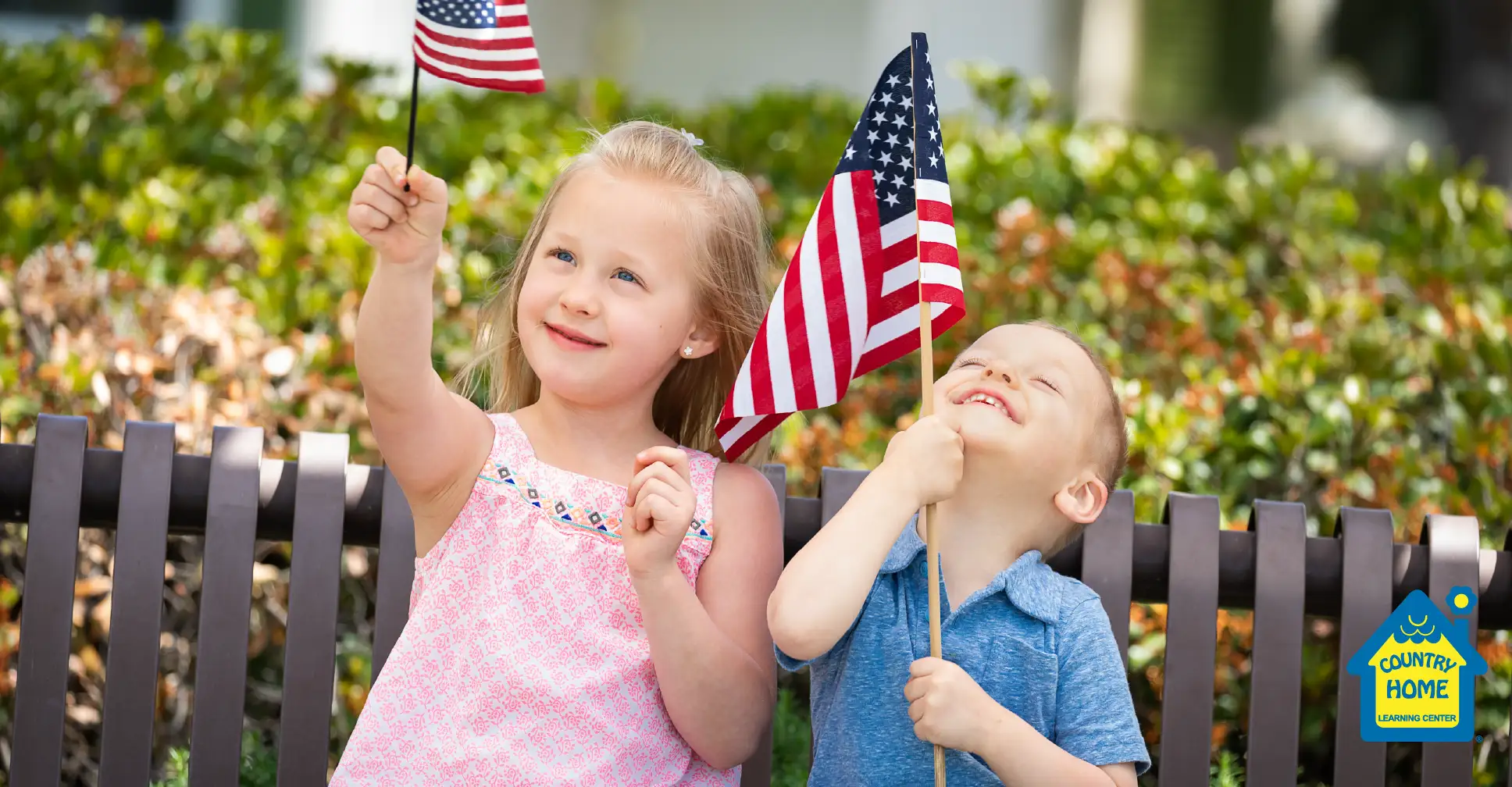
While it may not be as widely celebrated as Independence Day, Flag Day offers families a meaningful opportunity to talk with children about history, symbols, and civic pride.
The American flag represents unity, sacrifice, and the ideals our country was built upon.
For early learners, these conversations help build foundational knowledge about national symbols in an age-appropriate way.
For young children, symbols can feel abstract at first. That’s why Flag Day presents such a valuable teaching moment. When children regularly see the American flag at schools, post offices, parades, and community buildings, they begin to recognize that it stands for something important.
Simple explanations work best:
“The flag represents all the states working together.”
“Each star stands for a state.”
“The stripes remind us of the first 13 colonies.”
These small conversations plant the seeds of civic awareness and help your children connect what they see in their community to larger ideas about belonging and unity.
A Brief History of Flag Day
The story of Flag Day stretches back more than two centuries and includes educators, presidents, and students.
June 14, 1777: The Second Continental Congress adopted the first official American flag.
1885: A Wisconsin teacher named Bernard Cigrand organized one of the first known Flag Day observances with his students.
1916: President Woodrow Wilson issued a proclamation officially establishing Flag Day.
1949: Congress designated June 14 as National Flag Day, signed into law by President Harry S. Truman.
Flag Day began in classrooms, making it a natural fit for early learning environments like preschools and childcare centers today.
Fun & Fascinating American Flag Facts for Kids
Children love surprising facts, and the American flag has plenty to share.
1. The Flag Has Changed Over Time
There have been 27 official versions of the U.S. flag. Each time a new state joined the Union, a new star was added. The current 50-star flag became official on July 4, 1960, after Hawaii became a state.
2. A Teenager Designed Today’s Flag
The current 50-star design was created in 1958 by Robert Heft, a 17-year-old high school student. He designed it for a school project and originally received a B-minus. When President Dwight D. Eisenhower selected his design from more than 1,500 submissions, his grade was changed to an A.
This story shows kids that you’re never too young to make history.
3. The Flag’s Colors Have Meaning
Red symbolizes valor and bravery.
White represents purity and innocence.
Blue stands for vigilance, perseverance, and justice.
4. The Flag Is Also Known As…
The Stars and Stripes
The Star-Spangled Banner
The Red, White, and Blue
Old Glory
Flag Day Activities for Preschoolers & Early Learners
If you’re looking for Flag Day activities for kids, the best options are simple, interactive, and age-appropriate.
1. Count the Stars
Use a printed flag and encourage children to count the stars. Younger children may count by groups of five or ten, building early math skills alongside social studies awareness.
2. Red, White & Blue Sorting Game
Place small colored objects in a basket and ask children to sort them by color. This supports color recognition and classification skills.
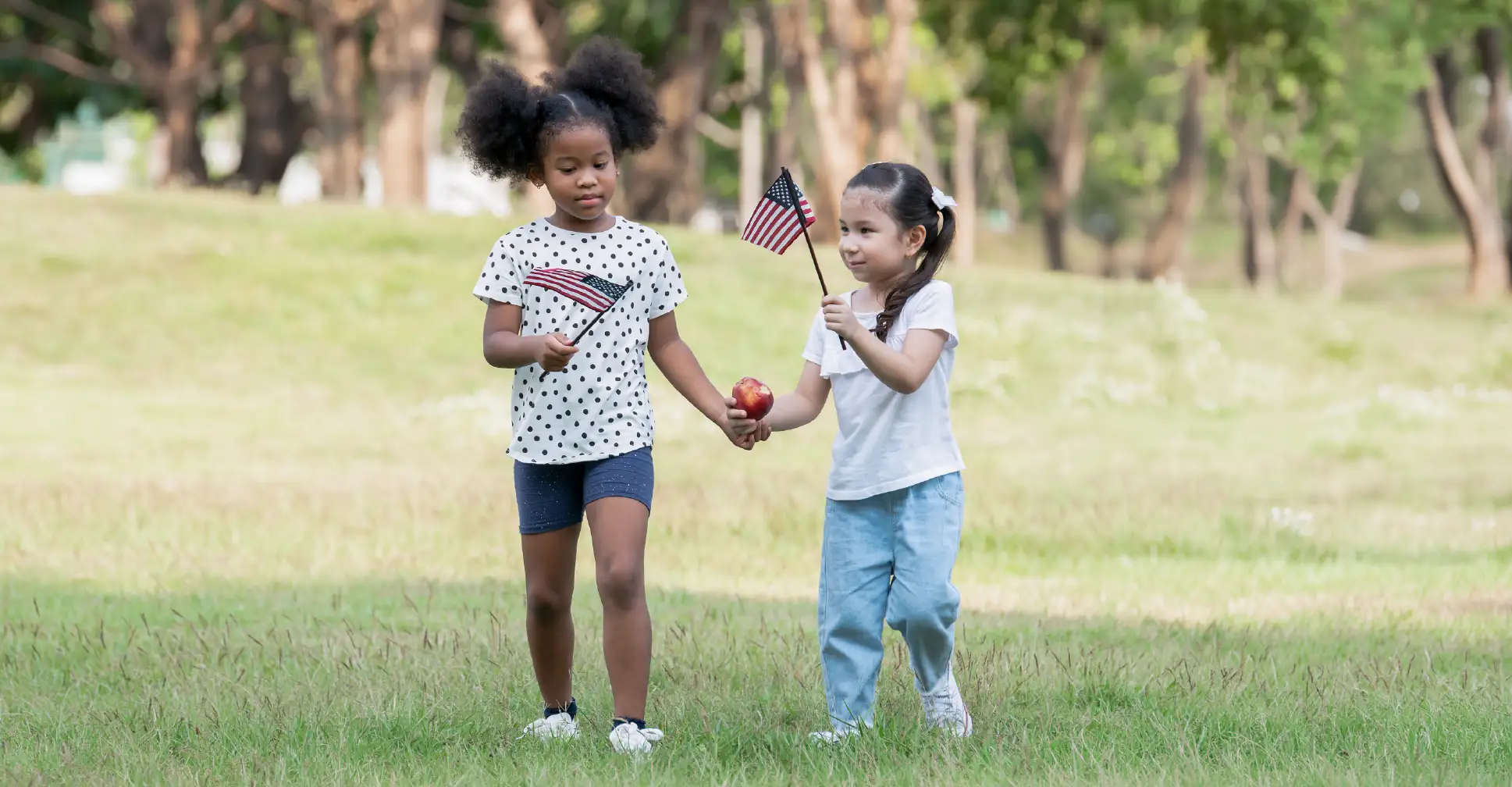
3. Community Flag Hunt
Take a short walk around your neighborhood and count how many American flags you see. Ask:
Where are they displayed?
Are they large or small?
Why do you think people put them outside?
This activity connects learning to real-life community observations.
4. Patriotic Music & Movement
Play child-friendly patriotic songs and encourage marching, clapping, or waving paper flags. Movement-based learning helps energetic preschoolers stay engaged and excited.
Easy Flag Day Crafts for Preschoolers
Crafts make holidays memorable while supporting fine motor development.
When children participate in Flag Day crafts for preschoolers, they practice:
Cutting with scissors
Gluing shapes
Following multi-step directions
Strengthening hand-eye coordination
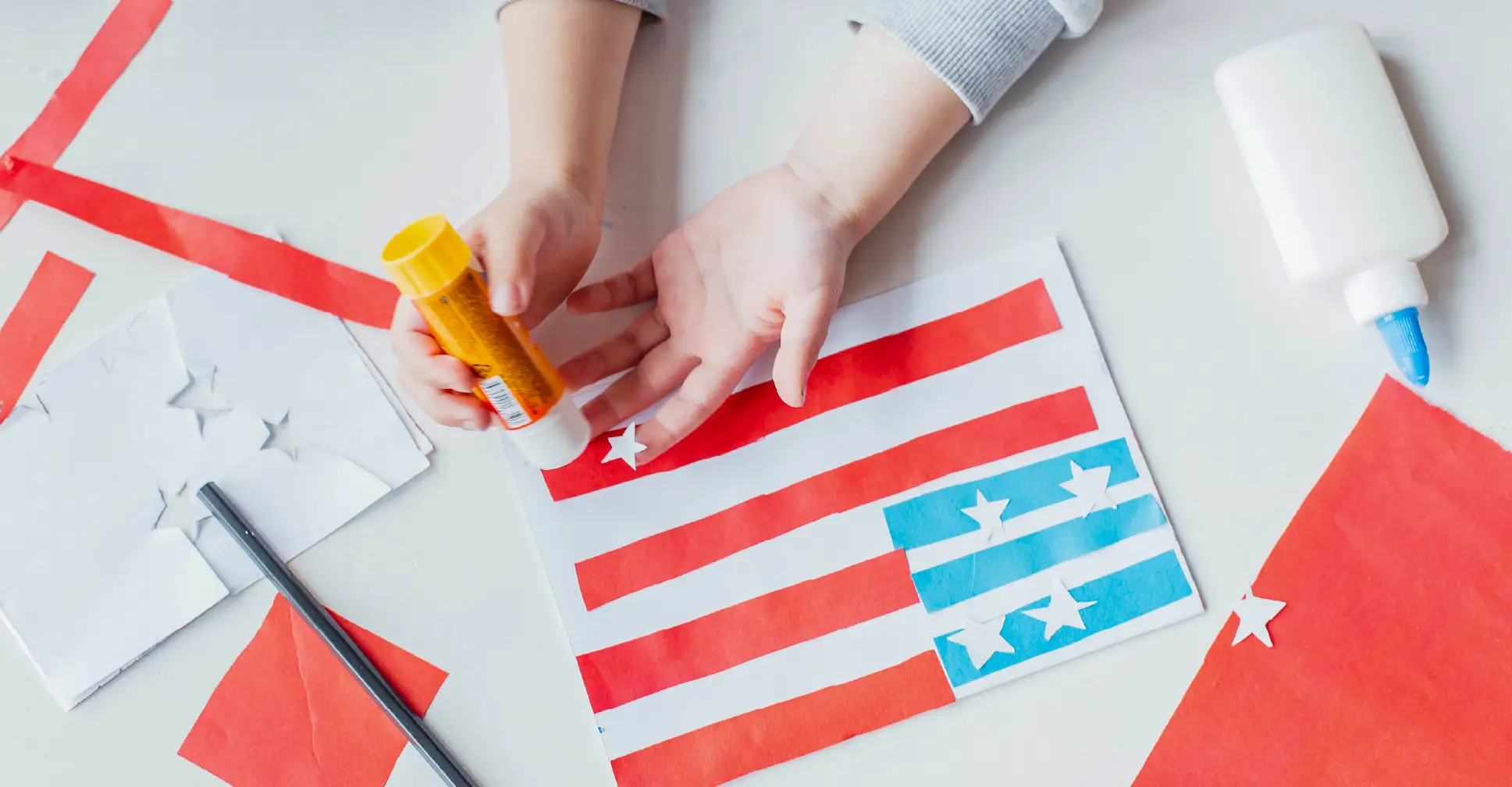
1. Paper Flag Craft
Draw or print an outline of the American flag, then have children glue pieces of red and white crepe paper onto the stripes. Add blue crepe paper to the top corner and finish with white star stickers or painted stars. Let it dry completely before displaying your textured patriotic flag.
2. Cardboard Roll Stamped Patriotic Stars
Cut several small triangles out of one end of a cardboard roll, then gently fold the sections outward to form a star shape. Dip the cut end into red or blue paint and stamp star patterns onto white paper. Let the paint dry completely, then add extra details like glitter or more colors for a festive Flag Day display.
3. Popsicle Stick Flag
Paint popsicle sticks red, white, and blue, then let them dry completely. Glue the sticks side-by-side in alternating red and white stripes, and attach a blue stick in the top left corner for the star section. Add star stickers or draw white stars, and let everything dry before displaying your flag.
Hands-on activities make learning interactive and fun.
Patriotic Books to Read on Flag Day
Reading together reinforces early literacy while introducing American history in a gentle way.
Consider adding these children’s books to your Flag Day celebration:
Storytime encourages curiosity and thoughtful discussion.
Flag Day Traditions for Families
Even though Flag Day isn’t a federal holiday, it’s easy to celebrate at home or in the classroom.
Simple Ways to Celebrate With Kids
Work on a festive craft
Read a children’s book about American symbols
Sing patriotic songs together
Talk about where you see the flag in everyday life
Celebrate With a Sweet Treat
Celebrate Flag Day with a fun, no-bake patriotic dessert. It’s a simple way to tie learning to family fun.
You might also consider starting a yearly family tradition:
Display a small American flag each June 14
Make a patriotic breakfast
Save your child’s Flag Day crafts in a keepsake folder
Celebrating Flag Day doesn’t have to be complicated; it just needs to be meaningful.
Why Flag Day Matters in Early Learning
At Country Home Learning Center, moments like Flag Day support early lessons in:
- Social studies foundations
- Awareness of community symbols
- Listening, discussion, and curiosity
Introducing national traditions in a gentle, engaging way helps children build context for the world around them.