
Music is a natural part of the childhood experience, from bedtime lullabies to classroom nursery rhymes. But even aside from the joy it brings, music has the power to support a child’s brain development. In fact, research shows that musical experiences can influence the structure and function of a growing brain, positively impacting cognition, language acquisition, emotional regulation, and social skills. In essence, our brains light up when listening, moving, or participating in music.
Today we will explore how music contributes to brain development during early childhood, from babies and toddlers to preschoolers and beyond.
Language and Literacy Skills
Even in infancy, musical exposure has a big connection to language development. Even well before they understand spoken langue, babies can recognize the rhythm and melody of words and music.
Serving as a foundation for language and reading, songs feature repetitive sounds, rhyming patterns, and varying intonations that can promote phonological awareness (ability to hear and manipulate sounds in words). Early exposure to songs and nursery rhymes leads to larger vocabularies and better reading skills as kids get older.
A study by University of Southern California’s Brain and Creativity Institute showed that children who received musical training showed accelerated development in brain areas responsible for processing language. In a nutshell, not only does music complement literacy, it helps the brain decode and use language.
The Music and Brain Connection
Music actually strengthens the connections between different regions of the brain all at once, including:
- Auditory cortex (processes sound)
- Motor cortex (handles movement)
- Limbic system (manages emotion)
- Prefrontal cortex (promotes decision-making and focus)
This activation works like a workout for your brain, developing strong neural networks for better communication and focus.
Memory and Attention
Memory can be enhanced as children strive to recall song lyrics or follow the rhythm of a beat. Not only does music helps children strengthen working memory (short-term tasks), but it can enhance long-term memory (storing and retrieving information) as well. It also takes focused attention to participate in musical activities, which further strengthens the brain’s executive function – a top predictor of school readiness and academic success. These skills range from self-control to cognitive flexibility.
Promoting Physical Coordination and Motor Skills
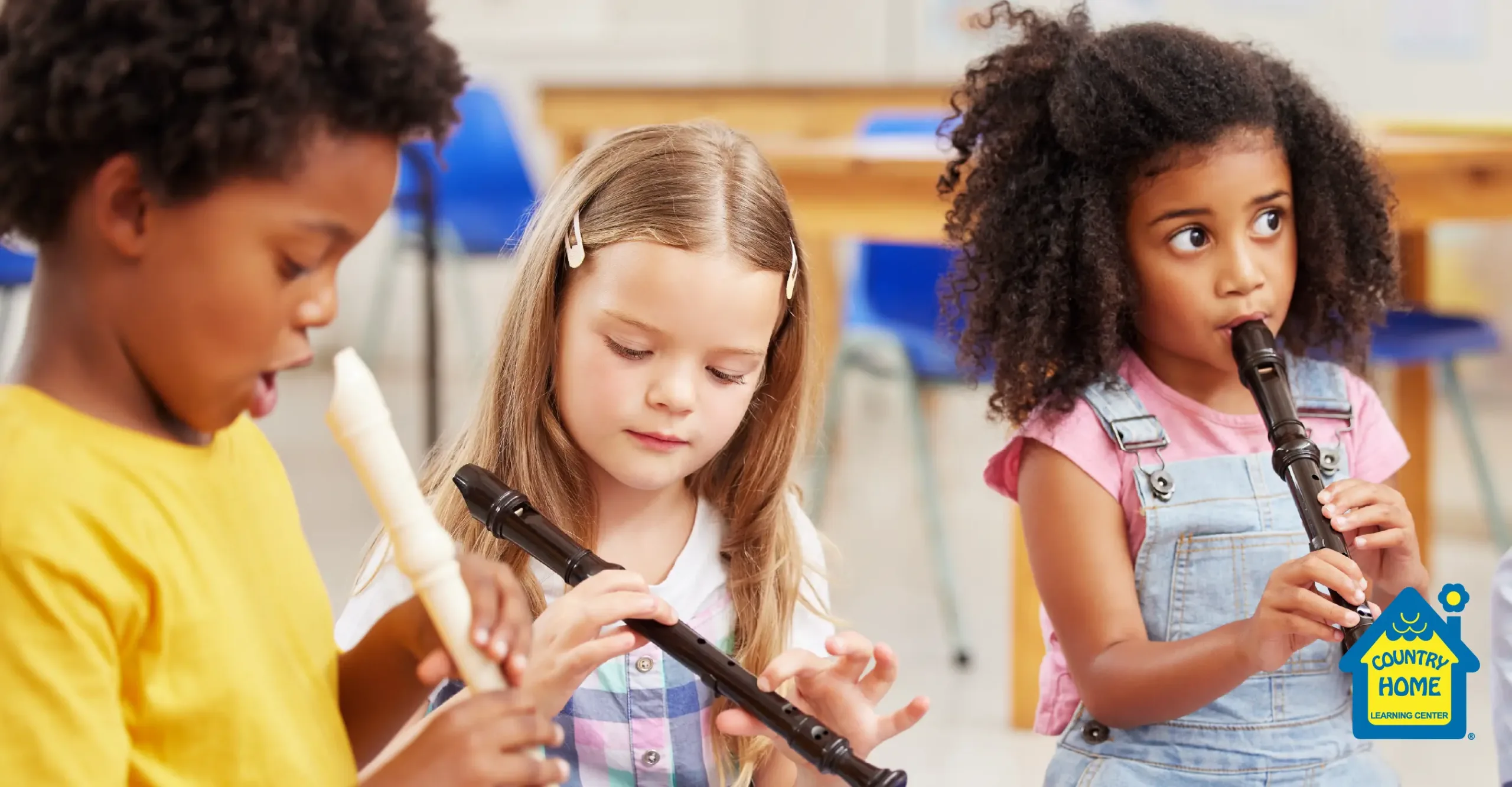
Children can hone their fine and gross motor skills when dancing, clapping, tapping, and playing simple instruments. It helps them coordinate their bodies, develop balance, and refine hand-eye coordination — physical attributes that are tied to brain development. Precise timing and rhythm is required to keep a beat, and for this, both hemispheres of the brain must be engaged. Music can actually build math and problem solving skills through these activities that strengthen motor pathways and sequencing abilities.
Emotional Development
Even the smallest of children react to the emotional tone of music. They show reactions to soothing, happy, or sad melodies, which in turn nurtures empathy and emotional intelligence. Plus, they can learn to regulate their emotions through music. For instance, a toddler will drift off to sleep more easily at naptime when hearing a calm lullaby, while an upbeat song can gather a room of preschoolers in happiness even on a rainy day.
Particularly in group settings, music helps children express emotions that they may otherwise not know how to put in words.
Social and Cooperative Skills
Group music activities bring people together, from circle time songs to participating in a rhythm band. Such environments encourage kids to take turns, listen to one another, and come together to achieve a task. All the while, they are building important social interactions that rely on empathy, cooperation, and communication.
Kids can also get a jolt in their self-esteem, gaining a sense of accomplishment and pride when participating in a musical performance, for example. When they get consistent positive feedback, they are willing to try new things as they get older.
The Long-Term Impact of Music
The early years may be the most sensitive period for brain development, but that doesn’t mean that’s where the cognitive benefits of music stop. In fact, music shows benefits into late childhood and adulthood. Even for children who don’t take formal music lessons, early exposure to song can build a solid foundation for learning and brain development. It doesn’t have to be fancy. Simply incorporate music into your child’s daily routine, singing songs as they get dressed or brush their teeth.
Music: More Than Entertainment
Music is more than just entertainment. It’s an enriching and dynamic experience that enhances brain connectivity, boosts language skills, fosters emotional growth, and builds coordination. A quality daycare or school curriculum will understand the value of music in early education and incorporate it in daily activities.