
Key Takeaways
- Early science exploration strengthens critical thinking, language, and confidence.
- 90% of a child’s brain develops before age five, says the CDC.
- Simple science experiments for preschoolers can use everyday household materials.
- Hands-on STEM activities support long-term academic success.
- Families in San Antonio and Austin can nurture curiosity through playful, guided discovery.
The preschool years are filled with wonder, and simple science experiments for preschoolers turn that curiosity into meaningful learning.
Curious little minds ask big questions.
- Why does it rain?
- Why do bubbles pop?
- Why does my shadow move?
According to the CDC, 90% of brain development happens before age five. During these early years, every hands-on experience helps build connections that support learning, problem-solving, and confidence.
The best part? You don’t need complicated supplies or a science lab. A few household items and a few minutes of focused attention can create powerful early childhood STEM moments.
Why Science Experiments Matter in Early Childhood
Science in preschool isn’t about memorizing facts. It’s about exploring, predicting, observing, and asking questions.
The Harvard Center on the Developing Child explains that young children build brain architecture through hands-on experiences and responsive interactions. When a child mixes colors or watches a seed sprout, their brain forms new neural pathways.
In the early years, simple experiences wire the brain for future learning.
Preschool science activities strengthen:
- Vocabulary and communication
- Early math skills
- Critical thinking
- Focus and memory
- Confidence in trying something new
For families in San Antonio and Austin, combining playful exploration at home with structured early education builds a strong foundation for lifelong learning.
In nurturing early learning environments, experienced teachers guide children through these discoveries with structure and encouragement, helping them build both knowledge and confidence.
6 Simple Science Experiments for Preschoolers
These hands-on activities are easy to set up and packed with learning.
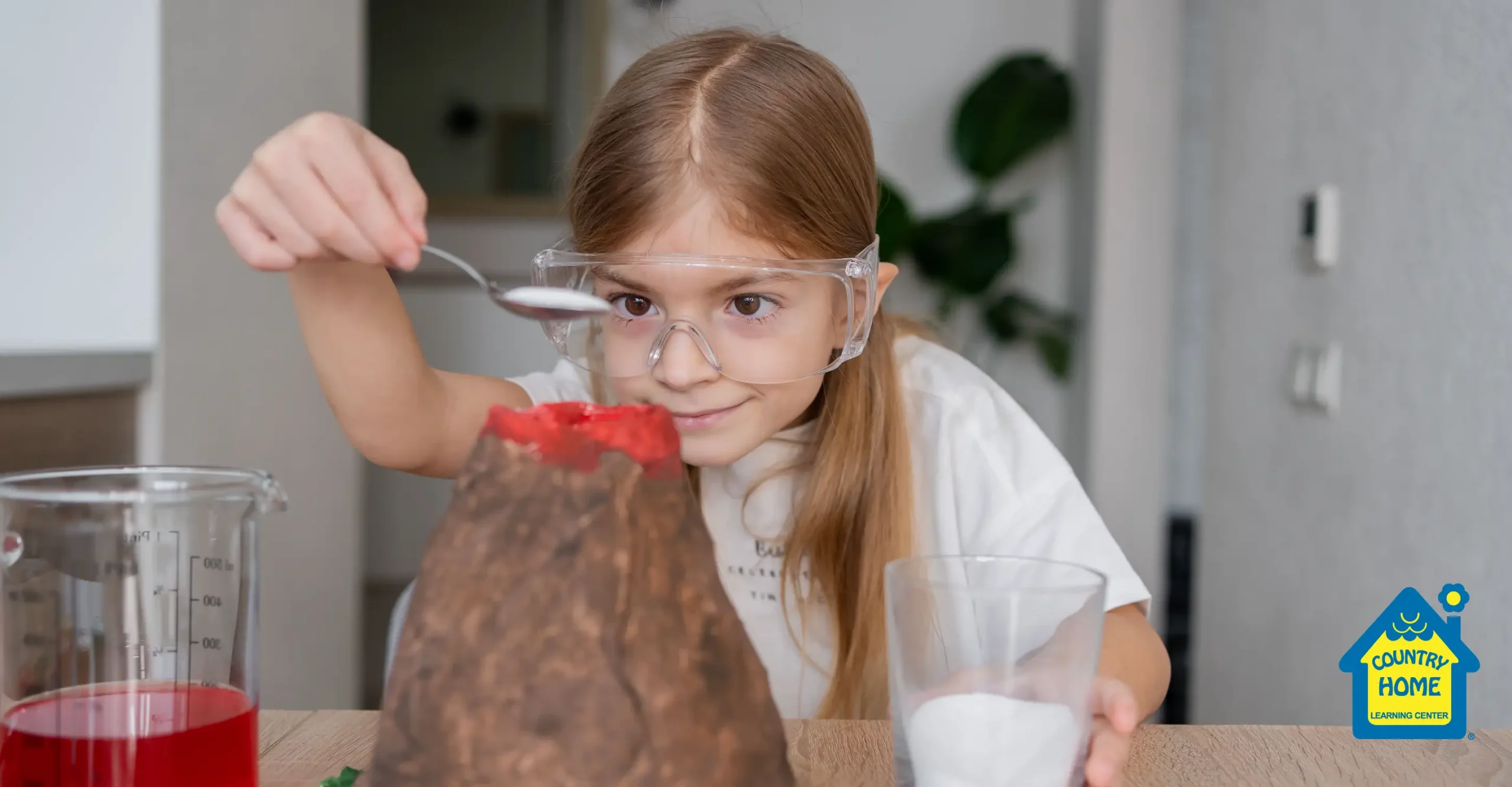
1. Baking Soda Volcano
You’ll Need:
- Baking soda
- Vinegar
- Dish soap
- Food coloring
Add baking soda to a small cup. Pour in colored vinegar and watch it fizz.
What Children Learn:
- Chemical reactions
- Cause and effect
- Observation skills
The excitement of the eruption makes learning unforgettable.
2. Color Mixing with Water
You’ll Need:
- Clear cups
- Water
- Red, yellow, and blue food coloring
Let your child mix colors and predict outcomes.
What Children Learn:
- Prediction skills
- Primary and secondary colors
- Scientific observation
They begin to see that experiments lead to discoveries.
3. Sink or Float Challenge
Fill a container with water and gather small household objects. Ask: “Will it sink or float?”
Test items like:
- A spoon
- A rock
- A sponge
- A toy
What Children Learn:
- Hypothesis building
- Density basics
- Comparison skills
Encourage them to guess first. That prediction process builds early scientific thinking.
4. Growing Beans in a Jar
Place a damp paper towel inside a clear jar. Slide a bean between the towel and glass. Check daily.
What Children Learn:
- Plant life cycles
- Patience
- Care and responsibility
Within days, roots begin to grow.
The National Association for the Education of Young Children notes that early exposure to STEM activities increases interest and confidence in science as children grow.
5. Magic Milk Experiment
You’ll Need:
- Milk
- Food coloring
- Dish soap
- Cotton swabs
Add drops of food coloring to milk. Touch the surface with a soap-covered swab. Watch the colors swirl.
What Children Learn:
- Surface tension
- Chemical reactions
- Visual patterns
It feels magical—and it builds real scientific understanding.
6. Shadow Exploration Outdoors
On a sunny afternoon in Austin or San Antonio, step outside. Trace your child’s shadow with chalk. Check it again later. Has it moved?
What Children Learn:
- Sun position
- Time awareness
- Spatial concepts
Outdoor preschool science activities connect learning to the natural Texas environment.
How Science Builds Confidence and Curiosity
When children experiment, they practice resilience. The predict, test, and adjust through a process that builds executive function skills.
Research shows that inquiry-based learning supports focus, working memory, and self-regulation—all key indicators of school readiness.
When children explore, they don’t just learn science—they learn how to learn.
For busy parents across San Antonio and Austin, science experiments for preschoolers don’t need to be long or complicated. Five to fifteen minutes of guided discovery can create meaningful developmental growth.
In structured preschool classrooms, this same hands-on approach is woven into daily activities, giving children consistent opportunities to explore, ask questions, and grow in a safe, supportive setting.
Making Science Part of Everyday Life in Texas
Science happens everywhere. From cooking dinner together to watering plants, you can nurture curiosity by asking simple questions:
- What do you think will happen?
- Why do you think that changed?
- What should we try next?
Spring in Texas offers perfect opportunities for outdoor exploration. Observe insects at the park. Notice how flowers bloom after rain. Talk about clouds and shadows.
In high-quality early learning environments, structured exploration blends with warmth and guidance. At home, you can continue that same approach—creating safe, supportive moments where children explore, discover, and grow.
FAQs
Q: Are science experiments safe for preschoolers?
A: Yes, with supervision and age-appropriate materials. Avoid choking hazards and closely monitor activities involving liquids or reactions.
Q: What age should you start STEM activities?
A: Children can begin exploring basic STEM concepts as toddlers. By preschool, they are ready for simple science experiments that involve predicting, observing, and discussing results.
Q: How long should preschool science activities last?
A: Keep them short and engaging. Five to fifteen minutes works well for most preschoolers.
Q: Do I need special supplies for science experiments for preschoolers?
A: No. Most preschool science activities use common household items like baking soda, water, food coloring, paper towels, and kitchen tools.
Encouraging Lifelong Curiosity
Science begins with a question. Preschoolers already have the curiosity: they simply need opportunities to explore. With simple science experiments for preschoolers, families in San Antonio and Austin can turn everyday moments into meaningful learning experiences.
When children experiment, they build more than knowledge. They build confidence, resilience, and a love of learning. Those foundations last a lifetime.