
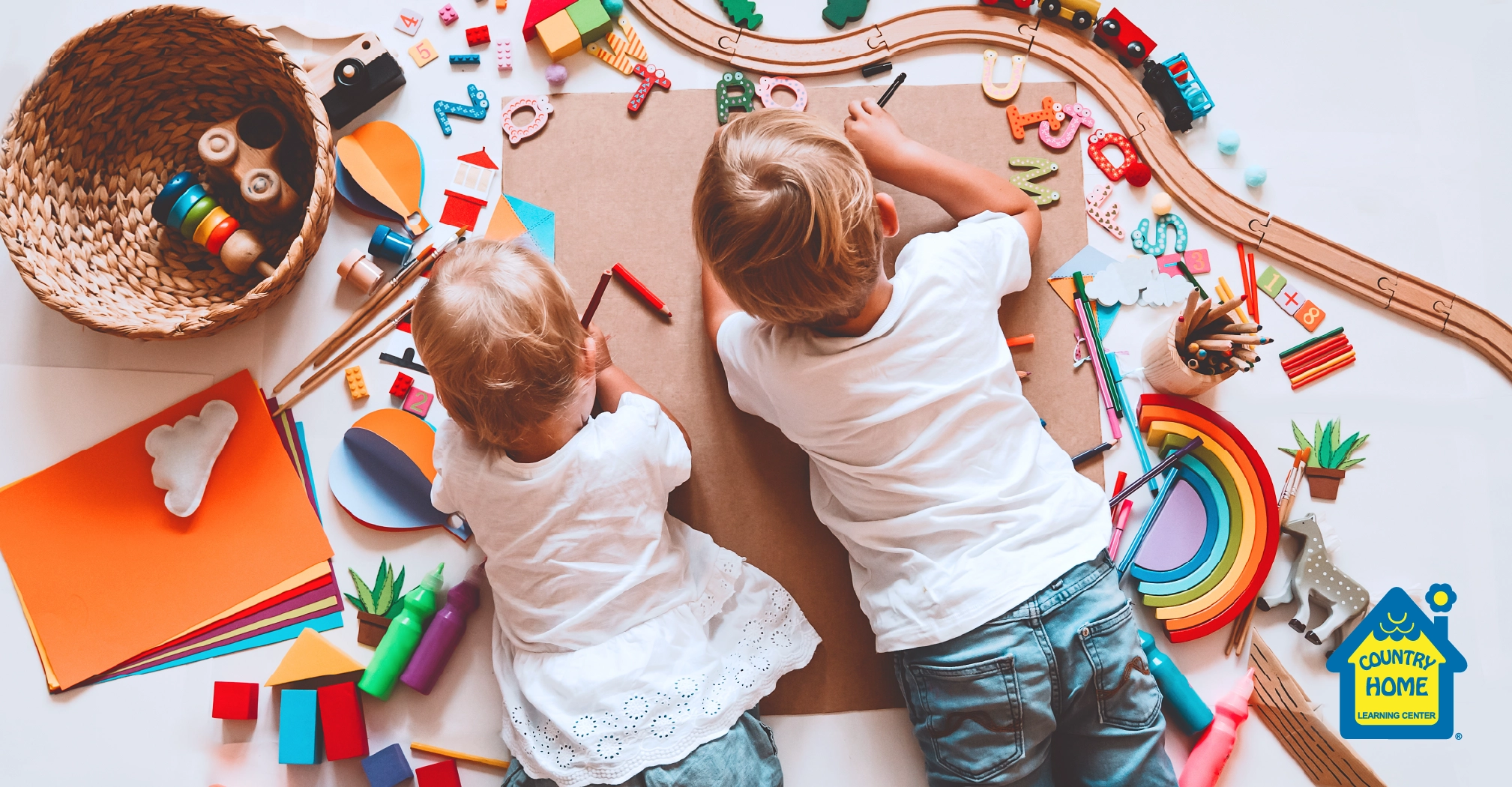
Multi-age interactions in early education settings are gaining popularity among educators and parents. The goal is to create environments where every aspect of a child’s development is nurtured, bringing together children of different age groups to play, learn, and grow together. This is unlike the traditional classroom approach that only groups children by age.
Today we’ll take a look at the benefits of multi-age interactions and why they form a valuable part of kids’ early learning journey, from preschoolers to beyond.
Social and Emotional Development
One of the biggest benefits of multi-age interactions is their impact on social and emotional growth, where kids take on a variety of social roles:
- Older children: They can act as mentors or helpers, gaining confidence by modeling positive behavior. These leadership skills foster a sense of pride and responsibility.
- Younger children: They learn through observation of older classmates, picking up on communication skills, social norms, and emotional cues from older peers.
This environment can help kids of all ages develop empathy, cooperation, and patience, which are all important life skills that extend far beyond academics.
Individualized Pace and Flexibility
Multi-age environments offer greater flexibility in terms of meeting each child’s developmental needs. All kids progress at different rates, and those differences are celebrate in multi-age interactions. Compared with a traditional classroom setting, where kids may feel pressured to keep up with others, multi-age settings respect individual learning paths. This allows students to learn at their own pace within a less competitive environment, and repeat activities without fear of judgement.
Learning Through Peer Teaching
An effective educational tool, peer teaching is when older children explain concepts or model tasks for younger children. This not only introduces the material to younger learners in a relatable way, it helps to reinforce older kids’ understanding of the subject.
Strong Classroom Community
Multi-age classrooms mimic families, where students spend more time together for longer periods. This paves the way for deeper connections between students and teachers, building:
- A supportive culture where each student helps the other find ways to succeed.
- Trust and emotional security among young learners.
- Familiarity among children, reducing anxiety.
Studies show that when children feel safe and connected, they become more willing to take risks, explore, and engage with learning materials.
Real-World Preparation
Age-segregated environments are very uncommon outside of the classroom setting. Families, neighborhoods, and workplaces are typically multi-generational, so the reasoning is: why can’t schools operate like that as well?
With mixed-age groups, kids learn to:
- Communicate with others at different stages of development
- Traverse social dynamics in various settings
- Adapt to different levels of play, conversation, and cooperation
Preparing for real-world situations: this is where flexibility and collaboration are so vital.
Independence and Leadership
Multi-age interactions encourage kids to naturally navigate a wider range of abilities and responsibilities, resulting in more self-reliance and initiative. When kids start to take ownership of their learning, they form the building blocks of lifelong leadership skills.
Growth Mindset
Learning is a journey, and mixed-age group interactions embrace this mindset. When younger kids observe older peers tackling new challenges, they see that growth is continuous. At the same time, older children recognize their own progress and feel comfortable learning at their own pace.
It’s this growth mindset that helps encourage resilience, curiosity, and a lifelong love of learning, and it’s all built on a commitment to dedication and effort.
How Is Multi-Age Learning Supported?
It’s wise to incorporate some aspects of multi-age learning into a school’s curriculum. Most learning centers thoughtfully structure their classrooms by age to support various developmental milestones. However, opportunities should be offered for students to interact across age groups in meaningful ways.
There are many ways in which different age groups can interact. For example, preschoolers can help toddlers with crafts, older toddlers can read to infants, and siblings can play together at recess. All of these multi-age experiences enhance each child’s learning and social development.
Blending academic, social, and emotional benefits, multi-age interactions are a powerful tool for young children because they are encouraged to learn from and with each other in natural ways. School isn’t just about ABCs and 123s…it’s about fostering compassionate, capable human beings.