
Key Takeaways
- Outdoor play helps preschoolers build stronger motor skills, balance, and coordination.
- Time outside supports emotional regulation and lowers stress in young children.
- Nature-based learning encourages creativity, curiosity, and problem-solving.
- Outdoor social play improves communication and teamwork skills.
- Preschoolers who spend time outdoors often show better focus and classroom engagement.
- Infant daycare and toddler daycare programs that include outdoor experiences can support healthy early development from the start.
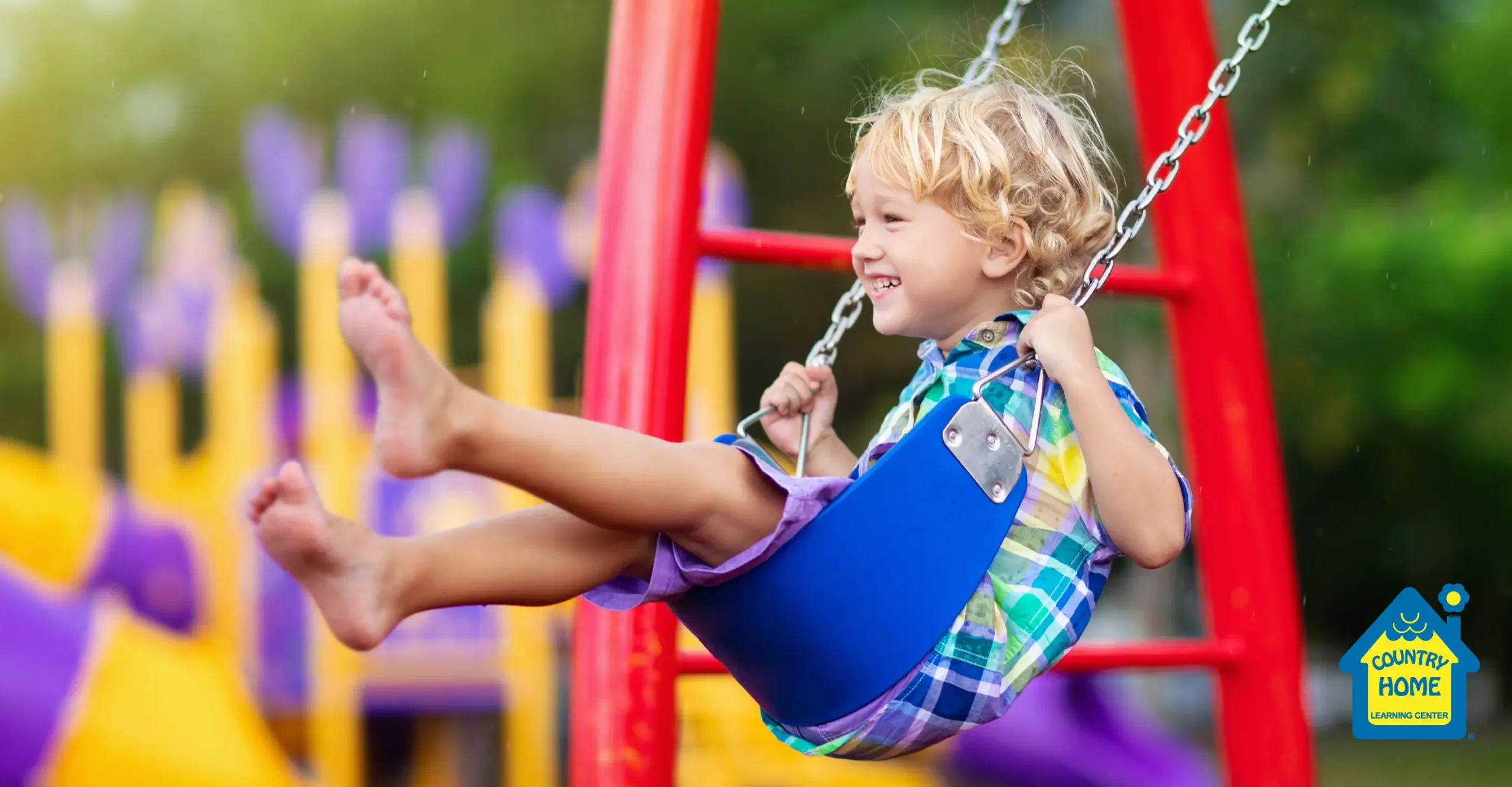
Fresh air, open space, and active play: these form the foundation of early childhood development. For preschoolers especially, outdoor play is a great way to build and grow physical, social, emotional, and cognitive skills. Whether they’re climbing and running or exploring nature and playing make-believe, outdoor experiences support healthy growth in ways indoor environments often can’t achieve.
At Country Home Learning Center, outdoor play remains an important part of the learning experience for children in preschool, infant daycare, and toddler daycare programs. Since 1982, our locally owned center has continued to recognize how valuable active outdoor time can be for developing learners.
Families searching in Southwest Austin neighborhoods like Circle C Ranch, Shady Hollow, and the 78739 and 78749 zip codes often prioritize programs that combine structured learning with safe outdoor experiences. The same is true for families in Northwest Austin communities such as Anderson Mill, Cedar Park, and Lakeline, where active learning environments are highly valued.
The Importance of Outdoor Play in Early Childhood
Outdoor play naturally encourages movement, experimentation, and discovery. The CDC notes that children ages 3 to 5 should stay physically active throughout the day to support healthy development.
In addition, research shows that preschoolers who regularly spend time outdoors may demonstrate stronger attention skills and improved emotional regulation. Exposure to outdoor environments can reduce stress and encourage positive moods, as well, which helps preschoolers feel more engaged and ready to learn.
“Play is often talked about as if it were a relief from serious learning. But for children, play is serious learning.” — Fred Rogers
Outdoor play introduces preschoolers to new textures, sounds, temperatures, and challenges, helping them build sensory awareness and confidence—whether that involves collecting different colored leaves or balancing on playground equipment.
How Outdoor Play Supports Physical Development
Running, jumping, climbing, and balancing all strengthen large muscle groups and improve coordination, helping children develop:
- Better balance and posture
- Improved hand-eye coordination
- Stronger muscles and bones
- Greater endurance
- More advanced gross motor skills
Preschoolers often feel comfortable taking healthy risks in outdoor environments, as they judge distances, navigate uneven surfaces, and develop body awareness.
But even for younger children enrolled in infant daycare and toddler daycare programs, outdoor experiences can offer opportunities for sensory exploration, tummy time, and stroller walks.
The American Academy of Pediatrics says that active play supports healthy weight management and reduces sedentary behaviors in young children.
Outdoor Exploration & Cognitive Growth
Outdoor play encourages critical thinking and problem-solving skills while out in nature, where there are endless opportunities for preschoolers to ask questions, test ideas, and explore cause and effect. Children may ask questions such as:
- Why do leaves change color?
- What happens when I mix water with dirt?
- How can we build a stronger sand structure?
- Why do some objects float while others sink?
These moments introduce early science and math concepts in natural and exciting ways.
Research by the National Recreation and Park Association suggests that outdoor learning environments can support attention span, engagement, and cognitive development in young children.
Open-ended outdoor play inspires creativity because there are fewer rigid rules, encouraging flexible thinking and imagination.
Social Skills Grow Naturally Outside
Outdoor environments often encourage collaborative play because children have space to interact freely. Large outdoor areas also allow children to release energy in healthy ways, which can reduce frustration and boost peer interactions. They learn to:
- Take turns
- Solve conflicts
- Share materials
- Practice empathy
- Develop leadership skills
In neighborhoods throughout Circle C Ranch, Shady Hollow, Anderson Mill, Cedar Park, and Lakeline, many families seek preschool programs that support both academic readiness and social development. Outdoor play helps bridge both areas naturally.
Outdoor Play in Year-Round Learning
Because development happens continuously throughout the year, consistent outdoor experiences are vital to this process. Because our center remains open year-round, children are better able to maintain routines and benefit from active learning opportunities no matter the season.
This consistency can be especially helpful for younger children in infant daycare and toddler daycare programs, where familiar schedules support emotional security and developmental progress.
Families in Austin and San Antonio often appreciate childcare programs that blend structured academics with active play and outdoor enrichment. A balanced approach allows children to engage both their minds and bodies every day.
FAQs: How Outdoor Play Benefits Preschoolers
Q: How much outdoor play do preschoolers need?
A: Experts recommend that preschoolers have multiple opportunities for active play throughout the day. Many early childhood programs include both structured outdoor activities and free play time.
Q: Why is outdoor play important for toddlers?
A: Outdoor play supports physical coordination, sensory development, and emotional regulation in toddlers. It also encourages curiosity and early social interaction.
Q: Can outdoor play improve classroom behavior?
A: Yes. Studies suggest that children who spend time outdoors often return to learning activities with improved focus, attention, and emotional balance.
Q: Does outdoor play help with school readiness?
A: Outdoor experiences build important skills related to problem-solving, communication, cooperation, and self-confidence—all of which contribute to kindergarten readiness.
Q: What should parents look for in an outdoor learning environment?
A: Be on the lookout for safe play spaces, age-appropriate equipment, supervised activities, shaded areas, and opportunities for both structured and imaginative play throughout Austin and beyond.
Outdoor play remains one of the most valuable parts of early childhood education, equipping preschoolers with opportunities for movement, exploration, and social interaction. Beyond supporting confidence, creativity, and resilience, outdoor play can make learning more joyful every day.