

Key Takeaways
- Teach gratitude through fun, hands-on Thanksgiving traditions and crafts.
- Children learn best when gratitude is modeled rather than preached.
- Simple activities leave lasting impressions.
- Make space for reflection to strengthen emotional intelligence and family bonds.
- Tailor gratitude-centered activities to any age and setting.
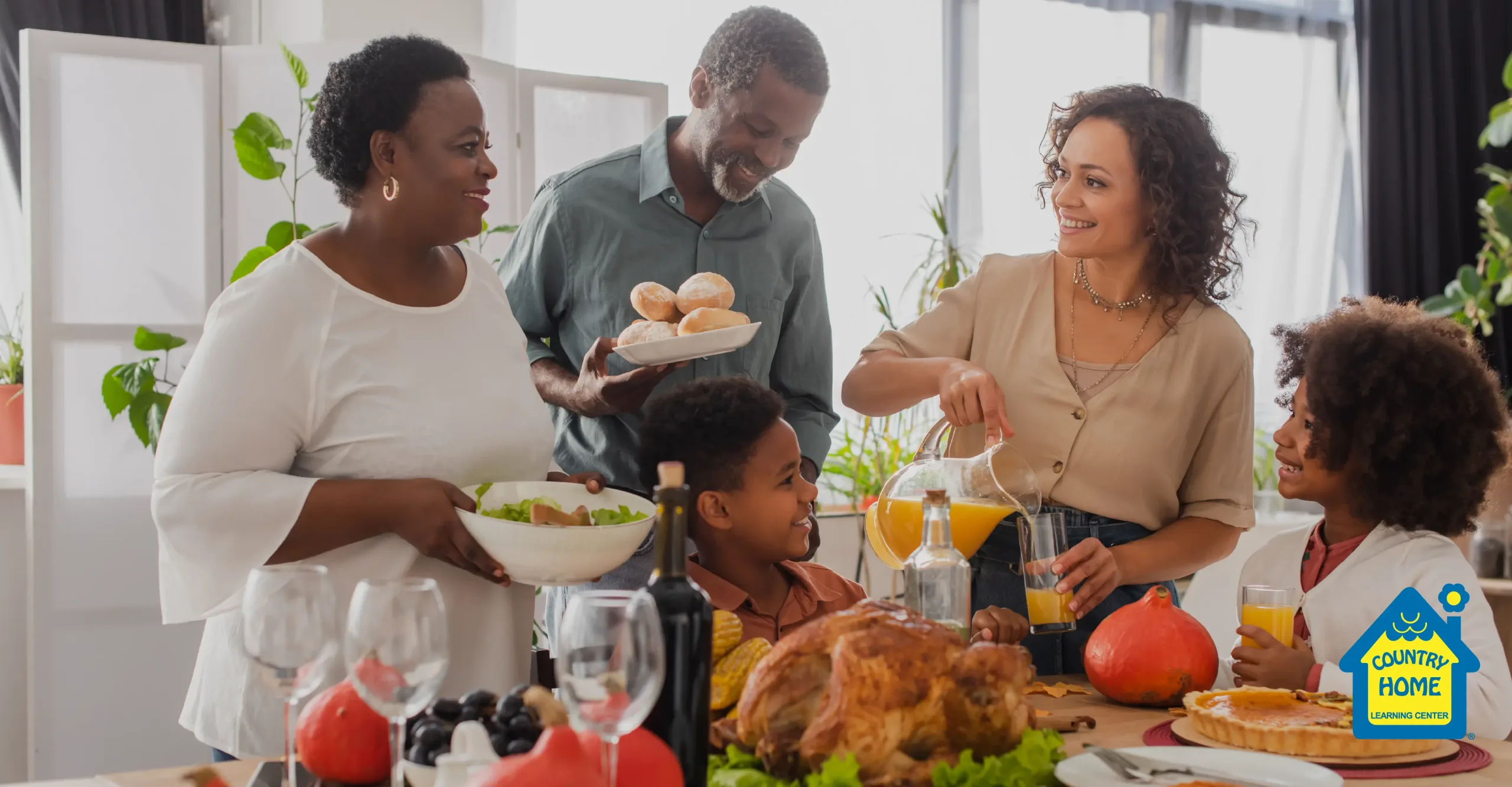
With Thanksgiving coming up, take this time to teach children about gratitude in meaningful ways that go beyond turkey and football. This is an opportunity to slow down, catch up with family, and reflect on what truly matters. Incorporating gratitude into Thanksgiving activities isn’t just about saying “thank you.” It’s about helping children see the good in themselves and others, build empathy, and form positive lifelong habits.
Whether you’re hosting 25 people around your table this year or you’re just having a quiet day at home, check out these creative ways to weave gratitude into your Thanksgiving celebration.
Gratitude Jar or Tree
Consider creating a “gratitude jar” or “thankful tree” to help children watch their blessings grow throughout the month of November.
- Find a jar or vase and add small slips of blank paper and pens.
- Tell each member of the family to write something they’re thankful for on the slip and put it in the jar.
- On Thanksgiving Day, read them aloud at dinner time.
You could also create a more visual version with a paper tree on the wall. Cut out paper leaves and, once each child has written something on them, attach them to the branches.
“Thank You” Craft
Thanksgiving crafts are a great opportunity to foster gratitude in a hands-on way. Here are some ideas on how to create crafts with a twist of gratitude.
- Thank You Cards: Have your kids write or draw cards for teachers, neighbors, or community helpers (such as mail carriers, crossing guards, and firefighters), then deliver them in person.
- Kindness Coupons: Help kids make “coupons” offering acts of kindness for family members (i.e., helping with chores or reading to a sibling).
- Gratitude Placemats: Using construction paper and markers, create personalized placemats where you can all list or draw things you are thankful for.
These crafts act as a bridge between artistic expression and emotional awareness of appreciation.
Stories of Gratitude
Stories are a great platform for teaching kids the joy of giving, and Thanksgiving is the perfect time for storytelling. Share personal memories or read books all about gratitude and thankfulness. Here are a few books to consider:
- The Gratitude Jar: This is a colorful children’s book about creating habits of thankfulness and appreciating the little things in lif
- Gratitude is My Superpower: This is a children’s book about giving thanks and practicing positivity.
- The 3 Minute Gratitude Journal for Kids: This journal teaches kids to practice gratitude and mindfulness each day.
Thankful Mealtime Traditions
Thanksgiving dinner forms the centerpiece of this holiday, so use it to your advantage by encouraging gratitude, sharing, and making a connection.
- Ask each person around the table to share something they’re thankful for.
- Write “thankful conversation starters” on slips of paper beforehand and place them under each plate.
- Create a gratitude tablecloth using a plain white or paper tablecloth. Give kids and adults markers or crayons and encourage them to write down what they’re thankful for.
These traditions give kids a voice and empower them to appreciate not just the meal, but the effort and meaning behind it.
Volunteer as a Family
There’s no better time than Thanksgiving to model service and community-mindedness. Even the smallest gestures show kids why giving back is so important. You can:
- Donate canned goods or gently used clothes to a local shelter or food bank.
- Make care packages for neighbors or families in need.
- Participate in community clean-ups or holiday drives.
Put control in your children’s hands and let them pick the activity, instilling a sense of responsibility and compassion that will stick with them long after the holiday season is done.
Gratitude Journal
Young children can use gratitude journal to reflect on their day and list things they’re grateful for. Small kids can draw pictures to illustrate their thoughts.
- Start by guiding your child with phrases like: “What made you happy today?” or “Who helped you today?”
- Make journaling a part of your bedtime routine.
- Set aside just a couple of minutes for reflection so it doesn’t seem like a chore.
- Let them decorate their journal so they can embrace a sense of ownership.
According to Positive Psychology, regular journaling builds emotional intelligence, mindfulness, and resilience in children and adults.
This November, you can celebrate the spirit of Thanksgiving by pausing to reflect on the good in our lives. Incorporate gratitude into your holiday traditions to help your child grow into a kinder, more empathetic human being. And remember: gratitude doesn’t end in November. It can be a year-round activity that you and your family can embrace together.