
Key Takeaways
- Emergent curriculum is a child-centered approach that builds learning experiences from children’s interests, ideas, and questions.
- To help children deepen their curiosity through hands-on exploration, teachers act as observers, guides, and collaborators.
- The emergent approach focuses on flexibility, creativity, and responsiveness rather than rigid lesson plans.
- Children become more engaged, confident, and motivated to explore the world around them when they help shape their own learning.
This approach to early childhood education “emerges” from children’s natural curiosity and everyday experiences rather than following a pre-set plan of weekly themes or lessons. To achieve this, teachers make observations in the classroom, from children’s conversations to their play time to their interests. They can then use those observations as a springboard for more meaningful learning opportunities.
At its heart, emergent curriculum in Austin grows organically from the children themselves. Teachers sit back and act as facilitators as they listen, document, and craft experiences that connect to the interests of the children.
Kids as Capable, Curious Learners
The central idea of an emergent curriculum is that children are capable, curious learners who can shape their own learning thanks to their eagerness to ask questions and explore. Rather than getting knowledge from the outside, children bring in their own perspectives, backgrounds, and interests to form their basis for learning.
Drawing inspiration from constructivist theories of learning, this philosophy says that knowledge is built through experience and interaction and that children learn best when they are active participants instead of passive recipients.
In an emergent classroom, the learning process is a priority and is just as important as the outcome. Instead of jumping in to provide all the answers, teachers give the children time and space to find the answers through investigation, trial and error, and collaboration.
According to the National Association for the Education of Young Children (NAEYC), the emergent curriculum model transitions from a culture of compliance to one of agency and curiosity. At its core, this approach reflects real life, with curiosity leading the way to exploration and discovery, which in turn leads to deeper understanding.
Teachers Observe and Guide
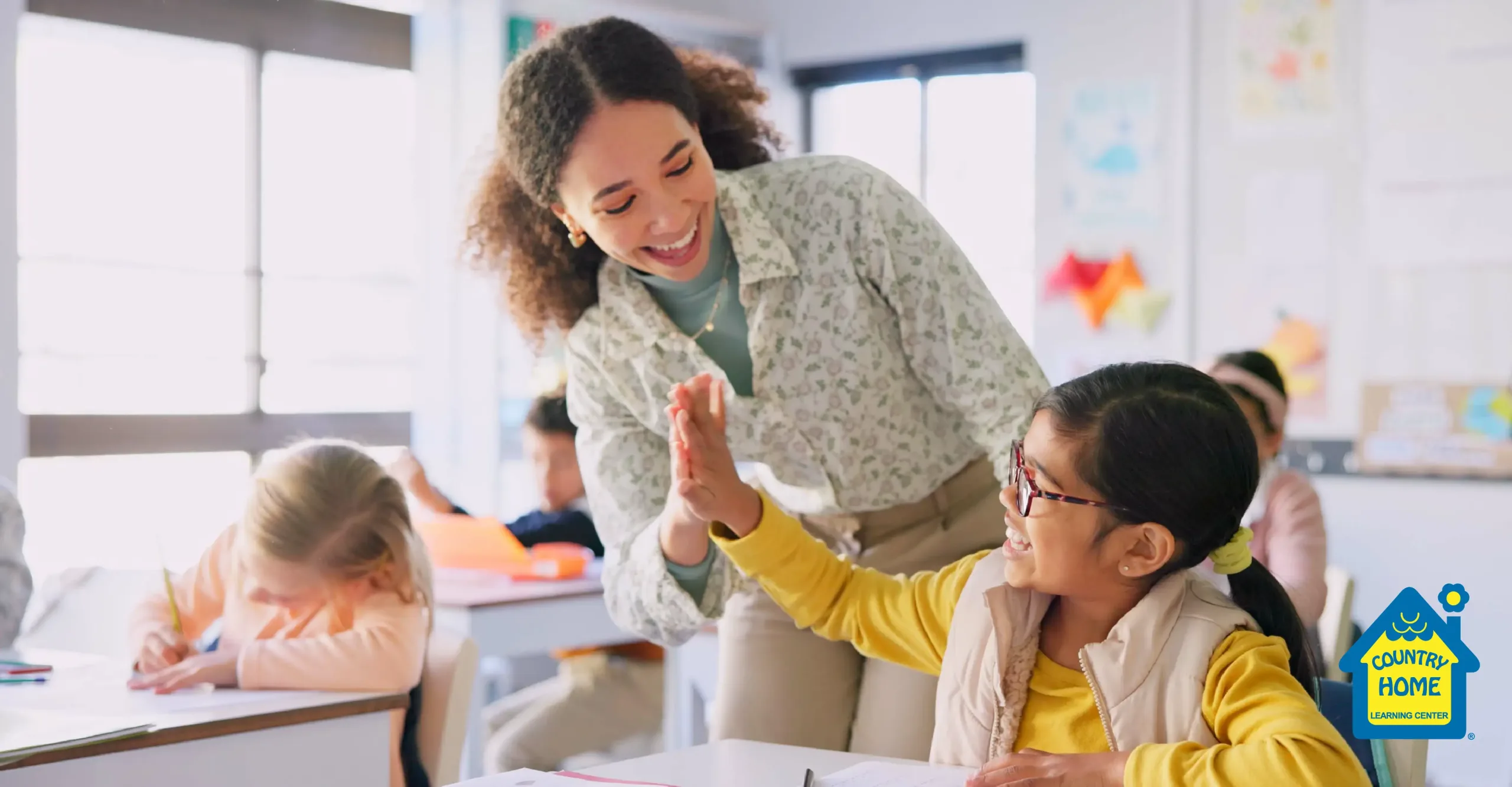
In this type of setting, teachers play a dynamic and responsive role. In a traditional classroom, teachers start off the week with a fixed lesson plan. But in an emergent classroom, they observe by:
- Watching interactions of peers
- Listening to questions
- Picking up on recurring themes in play or conversation
Once those observations have been gathered, they build experiences from there. Perhaps the children noticed a beautiful bird in a tree on the playground. The teacher would notice that while at recess, them equip the kids with binoculars, nature journals, and books about birds. This open-ended approach is guided by the children’s immediate interests.
Over time, teachers record children’s words, drawings, and progress to document their reflections so parents can gain insight into how the curiosity of their children can directly lead to discovery.
The Flexible Classroom
Flexibility is key to an emergent classroom, with the environment itself acting as a “third teacher”. Perhaps art materials are set out for open-ended creation, or maybe zones are rearranged to support cooperative play. Whatever the case, it’s this adaptability that gives kids the confidence to own their learning space.
The environment can shift at any moment based on a child’s question or discovery, with experiences that bridge many areas of development. These areas of development can span:
- Language
- Science
- Math
- Fine motor skills
- Social-emotional growth
How Students Benefit
Emergent curriculum is about much more than just basic academic knowledge. The focus is on developing confidence and a sense of ownership because they can use their voices to shape their learning experiences. With this approach, children know their thoughts, ideas, and feelings matter and that they are taken seriously when creating together.
Critical thinking and problem-solving: these are two other main components of the emergent curriculum. Through exploration, children learn how to investigate, test, revise, and collaborate with others. Because this process acts as a bridge to their curiosity, the learning process is more meaningful and memorable.
Structure and Flexibility: A Strong Balance
Despite the responsive nature of the emergent curriculum, it has elements of structure. Teachers provide intentional guidance and make sure experiences fit developmental goals; however, the structure is flexible to support and encourage exploration as it happens.
Routines help kids to feel secure and safe, yet they are allowed the space they need for unexpected discoveries – pairing consistency and creative freedom.
Because children are natural learners, this approach embraces meaningful motivation. When kids are interested in something, they tend to retain the information more than if they were to memorize from a book or flashcards.
Emergent curriculum isn’t just about delivering information; it’s more about fostering wonder and enlightenment in a classroom that is a living, breathing community of discovery.