

Key Takeaways
- Sensory play engages children’s senses (touch, sight, sound, smell, and movement).
- Indoor sensory activities support early learning and exploration, helping children build problem-solving skills and cognitive development.
- Use sensory bins, music and movement, and textured art to hone fine motor skills used for writing and everyday tasks.
- Sensory play can have a calming effect, helping children regulate emotions during overstimulation or boredom.
- Take advantage of rainy days to create hands-on learning experiences indoors using simple household materials.
Rain, rain, go away, come again some other day! Rainy days can be a drag, especially if you have young children at home or in the classroom. However, you can turn that rainy day into a fun indoor experience with these engaging sensory activities. When you can’t get outside to burn off all that energy, focus on sensory play with activities that stimulate a child’s senses, including touch, sight, sound, smell, and movement. Not only do these experiences help children explore the world around them, they help them strengthen core cognitive, emotional, and motor skills.
In fact, the Cleveland Clinic notes that sensory play helps build nerve connections in a child’s brain that support learning and the ability to complete complex tasks later in life. Check out these inspiring indoor sensory activities perfect for rainy days at home or in early childhood classrooms in Texas. Best part is, you only need a few simple household materials.
Importance of Sensory Play
Children learn best through exploration, and sensory activities provide the perfect bridge to learning. When young children are allowed to experiment in a guided environment, they can naturally discover cause-and-effect relationships and practice problem-solving.
Sensory play is versatile—it can be calming during moments of frustration, energizing during low-energy periods, and engaging enough to reduce screen time.
Studies show that sensory play can help children develop language skills, motor coordination, and social interaction through hands-on experiences.
Sensory Bins: Endless Exploration in a Container
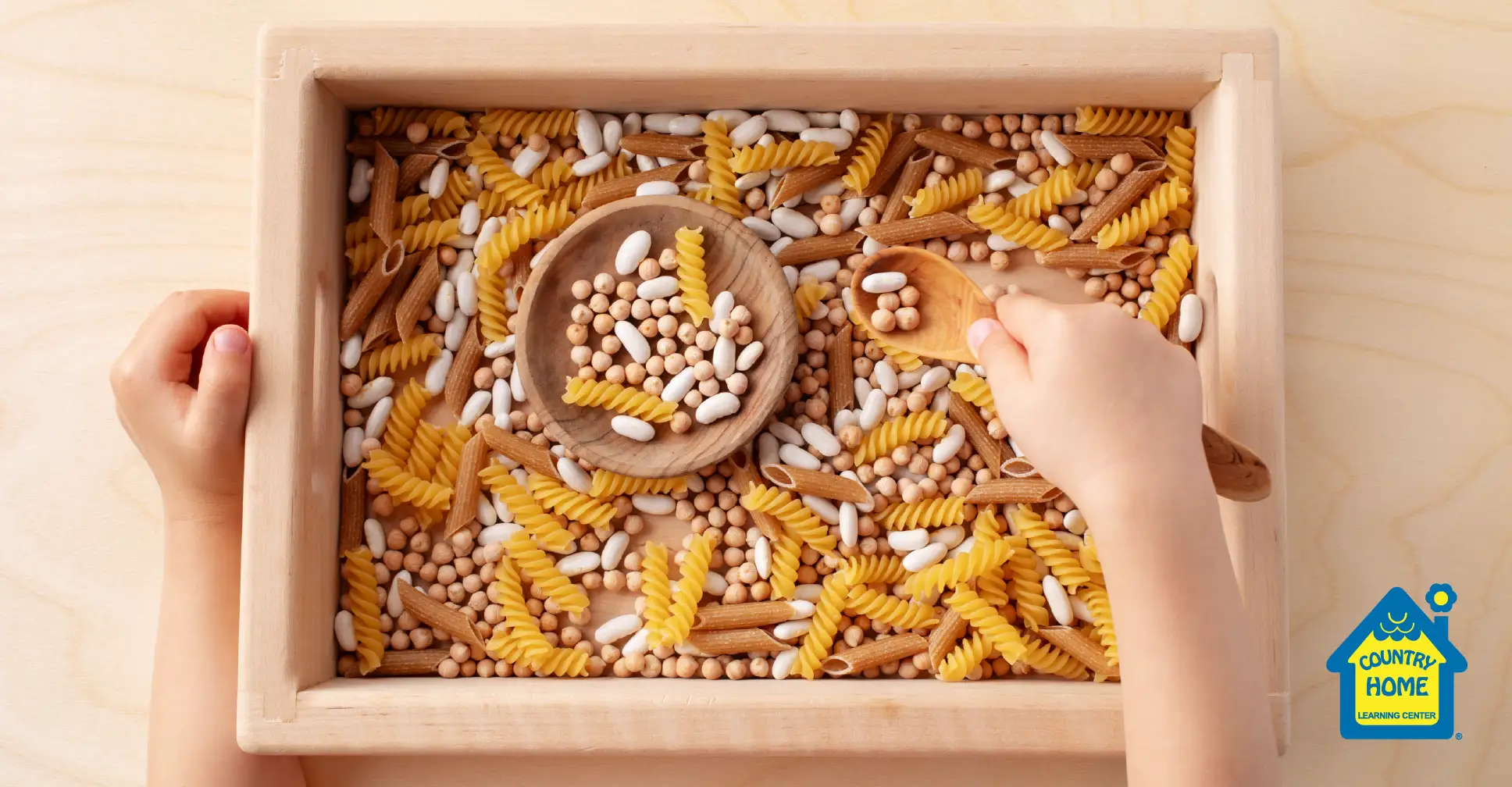
Sensory bins are simple yet effective. Just grab a container filled with materials that encourage touching, scooping, pouring, and sorting, such as:
- Dry rice or pasta
- Kinetic sand
- Cotton balls
- Shredded paper
- Water beads (for older children with supervision)
To encourage imaginative play, provide scoops, cups, or small toys, which will allow your preschoolers to strengthen the small muscles in their hands. These skills will later come in handy as they learn to read, write, and perform self-care tasks.
DIY Texture Art
Introducing different textures can stimulate touch while encouraging creativity and experimentation. Choose a variety of textured materials, such as:
- Bubble wrap
- Sponges
- Fabric scraps
- Sandpaper
- Feathers
Dip the materials into paint and stamp them onto paper to create textured artwork, sparking curiosity and encouraging imagination through open-ended exploration.
Indoor Water Play
Find a shallow tray or basin and fill it with:
- Measuring cups
- Funnels
- Plastic containers
- Sponges
- Floating toys
Children can pour, scoop, squeeze, and explore how water moves, which helps to introduce early science concepts such as volume, flow, and cause-and-effect. At the same time, youngsters learn hand-eye coordination and problem-solving as they fill and transfer objects.
Music & Movement
Sound and movement play important roles in development, promoting gross motor skills and balance/body awareness. At the same time, kids can use these opportunities to release pent-up energy during indoor days.
Activities can include:
- Dancing with scarves
- Playing rhythm instruments
- Free-movement games with music
Homemade Playdough Creations
This classic sensory activity engages both touch and creativity. As children manipulate the dough, they strengthen their hand muscles and improve dexterity—essential for tasks like writing or buttoning clothing.
Add scents like vanilla or cinnamon for an additional sensory layer, or offer the following to augment the activity:
- Rolling pins
- Cookie cutters
- Plastic utensils
- Beads or buttons (for older children)
Make your own playdough with these recipes.
Mystery Sensory Bags
Kids love guessing games. Simply fill a cloth bag with objects of different textures, then encourage children to reach inside the bag and try to guess what they are touching without looking. Ask them to explain what they feel as they go—an activity that encourages descriptive language (rough, bumpy, smooth, etc.)
Consider items such as:
- Sponges
- Toy cars
- Pinecones
- Cotton balls
- Small balls
Sensory play naturally supports vocabulary development because children learn to describe their experiences with new words.
Scent Discovery Stations
Don’t forget about the sense of smell during your sensory play activities. Fill small containers with items such as:
- Lemon slices
- Cinnamon sticks
- Vanilla extract
- Mint leaves
- Coffee beans
Ask the kids to sniff each container and describe the scents they notice. Use this memory-enhancing activity as a stepping stone to a discussion about foods, nature, and daily experiences.
Calm-Down Sensory Corners
Rainy days sometimes bring lots of extra energy, but they can also pose frustrating situations when kids find it difficult to regulate their emotions in tight indoor quarters.
Create a calming sensory corner with:
- Soft pillows or beanbags
- Weighted blankets or lap pads
- Stress balls
- Quiet music
Soft textures and squeezable objects help to ground children and provide a relaxing environment as they learn to self-regulate.
FAQs: Sensory Play
Q: What is sensory play?
A: Sensory play includes activities that stimulate a child’s senses—touch, sight, sound, smell, taste, and movement. These activities encourage exploration and learning through hands-on experiences.
Q: Why are sensory activities important for children?
A: Sensory play supports brain development, strengthens motor skills, improves language development, and encourages problem-solving and creativity.
Q: What age is sensory play best for?
A: Sensory play is beneficial from infancy through early childhood. Activities can be adjusted for different ages by modifying materials and complexity.
Q: Are sensory activities messy?
A: Some sensory activities can be messy, but many can be easily contained using trays, bins, or mats. Messy play is also part of the learning process because it encourages experimentation.
Q: How often should children engage in sensory play?
A: Daily sensory play supports healthy development, whether it’s for five minutes or an hour. Many early learning programs in Austin TX incorporate sensory exploration as a regular part of their curriculum.
The Power of Everyday Sensory Play
Sensory play doesn’t require expensive materials, complicated setups, or complex plans made ahead of time. Just grab some simple household items and have fun.
Sensory play fuels imagination, fosters independence, and encourages social interaction.
When the weather is gloomy outside, turn rainy days into engaging opportunities for exploration, creativity, and meaningful learning.