
Key Takeaways
- Simple, sensory-friendly Easter crafts help to build fine motor skills and creativity.
- Indoor and outdoor options ensure fun regardless of weather.
- Egg hunts can be about so much more than finding candy.
- Inclusive craft ideas encourage all preschoolers to participate with confidence.
- Seasonal activities support language, counting, and cooperative play.
Spring’s arrival is on our doorstep, bringing fresh blooms, warmer weather, and a season full of excitement—especially for preschoolers. Easter is also coming up, presenting the perfect opportunity to combine creativity, play, and developmental learning through crafts and egg hunts.
These crafts and activity ideas achieve a lot, whether the goal is to practice fine motor skills, spark imagination, or simply enjoy quality time together. So, gather your preschoolers and get creative with these fun, engaging Easter activities to celebrate the season.
Creative Easter Crafts for Little Hands
Preschoolers enjoy hands-on projects because they can get colorful, creative, and imaginative with the freedom of age-appropriate crafts.
1. Tissue Paper Easter Eggs
Materials you will need:
- Construction paper or cardstock
- Assorted colored tissue paper squares
- Glue sticks or liquid glue
- Markers or crayons
Directions:
Draw large egg shapes on cardstock. Have your preschooler tear tissue paper into small squares and glue them inside the egg outline. The torn tissue paper creates a stained-glass look when light passes through.
Skills this craft develops: Fine motor control, color recognition, hand-eye coordination.
2. Cotton Ball Bunny Faces
Materials:
- Paper plates
- Cotton balls
- Glue
- Googly eyes
- Pink construction paper
Directions:
Glue cotton balls onto the plate to make a bunny face. Add googly eyes, a paper nose, and whiskers.
Skills this craft develops: Sensory play, creativity, social interaction
3. Pasta Easter Necklace
Materials:
- Rigatoni pasta
- Food coloring or paint
- Yarn or string
Directions:
Use paint or food-colored water to color the pasta; let it dry. String the colored pasta onto yarn to make edible-safe Easter necklaces.
Skills this craft develops: Pattern recognition, color sorting, hand coordination.
Beyond Candy: Egg Hunt Ideas
Who says your egg hunt has to include hiding plastic eggs filled with sweets? This is a great touch, of course, but you can also take things a step further. This craft appeals to preschoolers who are learning to sort, count, and follow simple instructions.
1. Color-Coded Egg Hunt
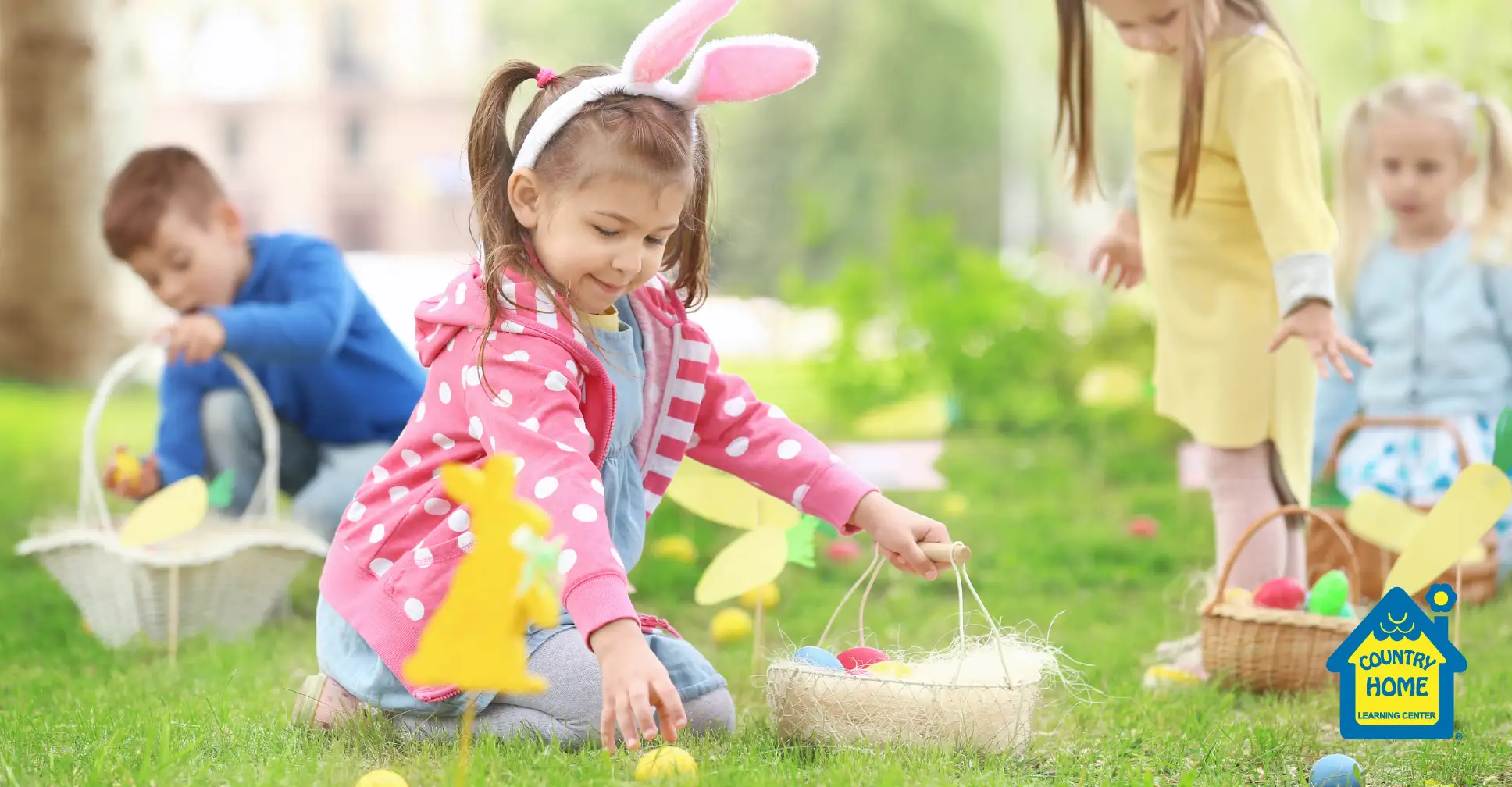
Assign each child a color, then hide the eggs. Instruct the preschoolers to find and collect only the eggs that match their assigned color. This activity discourages competition and encourages focus, backed by skills such as color matching, turn-taking, and self-regulation.
2. Shape Match Egg Hunt
Instead of candy, fill plastic eggs with shape cards inside (e.g., circle, triangle, square). Hide the eggs; then once they have found them all, have them match the shapes on a board or mat. This activity focuses on shape recognition, vocabulary building, and group participation.
3. Numbered Egg Search
Place numbered stickers inside eggs and hide them. After finding them, preschoolers can sort eggs from smallest to largest number or count the contents within. This activity reinforces early number sense, counting confidence, and sequencing.
4. Outdoor Nature Hunt
Combine the egg hunt with a mini nature discovery walk. Print out simple items on a scavenger hunt to find the eggs near things such as flowers, trees, or rocks. They can check off each egg as they find them and then talk about their discoveries. This activity reinforces observation skills, nature appreciation, and language development.
Easter Sensory Stations
Sensory stations are fun ways to keep preschoolers engaged while supporting self-directed play.
1. Easter Sensory Bin
Fill a plastic bin with colored rice or shredded paper for “grass.” Then add plastic eggs, small toy animals, scoops, and cups for children to explore. Sensory bins help with tactile exploration, imaginative play, and spatial awareness.
2. Bunny Footprint Path
Make a bunny trail using construction paper footprints, meandering up to a sensory table or hidden treasure. Preschoolers can follow the trail and talk about what they find along the way. From problem-solving to storytelling, there are many benefits associated with this fun activity.
Language & Music Activities
Easter is the perfect time to help build listening and speaking skills. Studies show that music strengthens the connections between different regions of the brain all at once.
1. Easter Song Circle
Sing traditional songs such as “Little Bunny Foo Foo” and “Here Comes Peter Cottontail”, or make up your own songs about eggs, bunnies, and springtime. Add instrumentation and rhythm with shakers or bells. These mini concerts help kids with vocabulary, auditory discrimination, and group participation.
2. Storytime With Props
Read a spring or Easter picture book with props such as felt eggs, bunny ears, or soft toys for added interaction. This helps with reading comprehension, narrative skills, and social interaction.
Easter Activities: Opportunities for Learning and Bonding
Studies show that preschoolers develop language, motor skills, and social understanding through creative play and exploration. Through open-ended and inclusive activities and crafts, each preschooler can feel free to explore their imagination and nurture their curiosity throughout spring and beyond.